
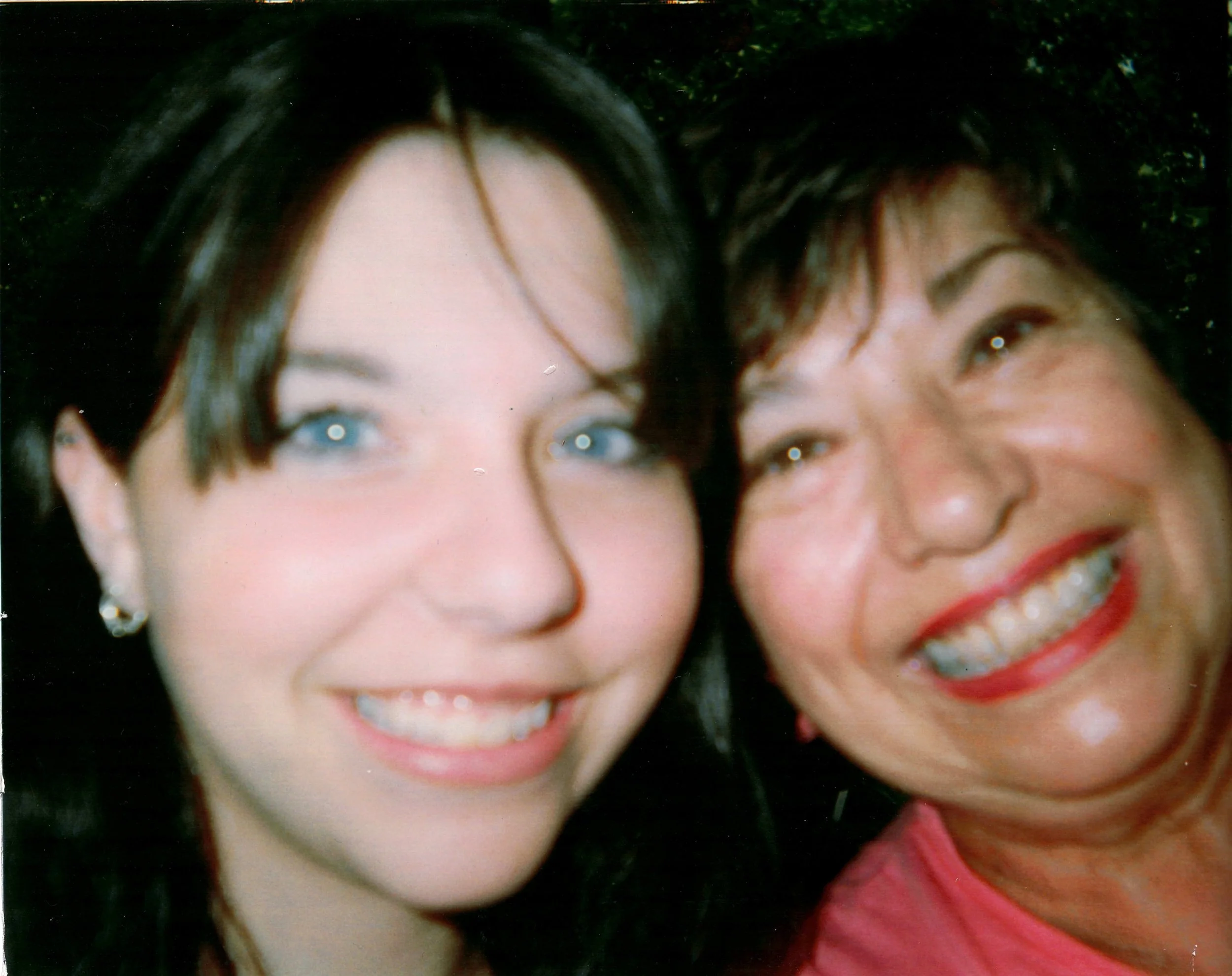
The Lockbox and The Therapy
(How EMDR is Changing My Pain)
It’s strange. I have very vivid memories of the moment I first heard the news, but there’s holes and faded shadows that I can’t seem to recall. It was a Monday. I was probably getting ready for work. I think it was about 8:00 in the morning. It was a sunny and warm spring morning in Hot Springs Village, Arkansas. My wife and kids, a rambunctious four year old son and seven month old daughter, lived in a bucolic neighborhood and I had recently launched my first website (www.dphilp.com).
That’s what I remember, what I have clear memories of… until the news was first uttered: “Valerie is dead.” My wife said it in a tender, almost timid voice, “She was found dead in Myrtle Beach, South Carolina… an apparent drug overdose.”
Then I remember my knees buckling, I slumped to the floor, my wife catching and cradling my head as I was swept away in a tsunami of tearful grief. Valerie, my 17 year old daughter, my first born child, dead. I have foggy memories from that moment forward, only scraps and segments of recollection, but the most painful memory is all too clear: Valerie was dead.
How the fuck do I wrap my head around this? Even now, a quarter century later, I have trouble wrapping my head around that fact. But on this day, April 16, in 2001, and For The next two or three weeks, I have virtually no memory whatsoever of what I did, how I felt, or what was going on around me I know I cried a lot, I know I didn’t sleep very much. I remember holding our newborn baby for CC see hours and imagining she was Valerie. and I remember thinking why? Why why and how how how and what do I do next? how can Valerie be dead?
But it was true and it got worse over the next year. After the initial shock, once the autopsy was complete, it was revealed that although it was drugs that killed her, she wasn’t dead because she took the drugs. She was, in fact, “ruffied”, that is, she was given a horse tranquilizer slipped into a fruit punch. She had so much horse tranquilizer that it would have killed 3 horses. The autopsy also revealed that the needle found in her arm was put there after she died; and that triggered the investigation. The first investigation.
In the meanwhile, life went on and it’s ordinary ways. I had just started a business, I had a wife and two kids at home, and another son from my first marriage in Chicago. I had to pull myself together quickly, my little family was depending on me. That’s when I first learned the trick, a mind trick of taking these awful horrible, unfathomable feelings and putting them in a lockbox. A lockbox inside my soul, in the very back of the bottom drawer in my cabinet of feelings. Somehow it made the pain tolerable, and somehow over the years it seemed to ache less. But I always knew it was there, I could always feel it sitting heavy in the back of that very bottom drawer of my cabinet of feelings.
Nothing was the same after that. It’s still not the same even today. But for the first five years, I carried that heavy lockbox in the very back of the bottom drawer through everything I did, every single day, until one day it just exploded. Without warning, as I drove down an expressway in Chicago land, minding my own business and listening to NPR, something happened. Again, I have no memory of it, just vague flashes of laying on the freeway in front of my car in a traffic jam. Of some kind of EMT, lifting me up in a gurney and putting me in the back of an ambulance. Of being locked in a room at some hospital, I didn’t know where I was, I didn’t know who I was, and for three days in a padded room I was casually observed by doctors, nurses, orderlies, and others.
Eventually, after a six week stay in the psychiatric ward and being treated for the wrong diagnosis, I was released into an extended partial hospitalization program and treated with a roulette wheel of medication to treat the wrong diagnosis. This treatment continued for almost two years before I finally diagnosed with the correct condition; not bipolar disorder, but Post Traumatic Stress Disorder and an anxiety disorder.
Once the diagnosis was correctly diagnosed, the treatment was much different and more effective. That was just over 15 years ago, but the lockbox in the back of the very bottom drawer in my cabinet of feelings was still there. It was still heavy and still something I tried to just get along with; like having a limp, I was still walking, but a bit more crooked than usual. I made do, I got along fine, or so I thought.
I started with the prescription medication, and they were effective initially, but it would take more than medication. I learned to meditate and started practicing a more somatic lifestyle. I still have that practice but I stopped using the psychiatric drugs about a decade ago. I use cannabis medicinally, and I still use a variety of supplements to treat myself. I have a prescription for a sleep aid that I use when needed, but that’s not too often.
Last year, while my mother was in the at-home hospice stage of palliative care, I was handed a book by one of the nurses helping me manage my chronic pain. It’s called The Body Keeps the Score by Dr. Bessel van der Kolk.
The premise is simple, but it landed hard: trauma doesn’t just live in memory… it lives in the body. It shows up in ways we don’t always recognize… pain, tension, fatigue, patterns of thought and reaction that don’t seem connected until you start looking closely.
I recognized myself in those pages. Not just in the diagnosis… I had already been there… but in the realization that what I had been doing for years was managing the symptoms… not actually addressing the source.
The book introduced a form of treatment I had heard about, but never seriously considered: EMDR: Eye Movement Desensitization and Reprocessing.
At its core, EMDR is not about retelling the story over and over. It’s about how the brain processes memory. Through guided attention… often using bilateral stimulation like eye movement or alternating taps… the brain is able to revisit stored experiences and begin to reprocess them in a way that reduces their emotional charge. It doesn’t erase what happened… it changes how it lives inside you.
Last October, I decided to try it.
It hasn’t been fast. It hasn’t been dramatic. And it hasn’t been anything like what I expected.
Most of the work hasn’t even been about Valerie. Not yet.
Instead, it’s felt like going back into that cabinet of feelings I built all those years ago… and opening drawers I hadn’t touched in decades.
Some sessions feel like nothing more than clearing space, what I’ve come to think of as “clearing the room.” Talking. Processing. Making enough room to even approach what’s deeper.
Other times, something shifts.
The first thing I noticed was lymphatic drainage; my nose, ears and a slight trickle of fluid. I noticed the fatigue afterwards, not just feeling tired, but drained. Sometimes it was a mild but persistent headache, other times I just felt empty, devoid of emotion.
But over time, I felt other things. I was feeling less pain. I regained some energy and endurance. I slept better. I ate better. I was having physical reactions to a psychological process. This is a new thing for me, my body keeping a new score.
I’ve found grief I didn’t know was still there. Not just for Valerie… but for others. Todd. Pieces of my past that I had long ago decided were settled.
I’ve felt anger surface in ways I didn’t expect. Old narratives loosening, or at least moving enough for me to see them differently.
None of it has been overwhelming. But none of it has been insignificant either.
It’s like I’ve been walking through that cabinet, one drawer at a time… not forcing anything open, just allowing myself to see what’s inside when it’s ready to be seen.
And all the while… that bottom drawer has been there.
The one in the back.
The one with the lockbox.
This piece, what you’re reading right now, this is me opening that drawer. Not the box itself… not yet. But the drawer. Pulling it out. Letting it sit in front of me for the first time in a very long time.
And this afternoon… in my next session… I open it.
Not to fix it.
Not to resolve it.
Not even to understand it completely.
Just to finally look inside.
And see what’s still there.